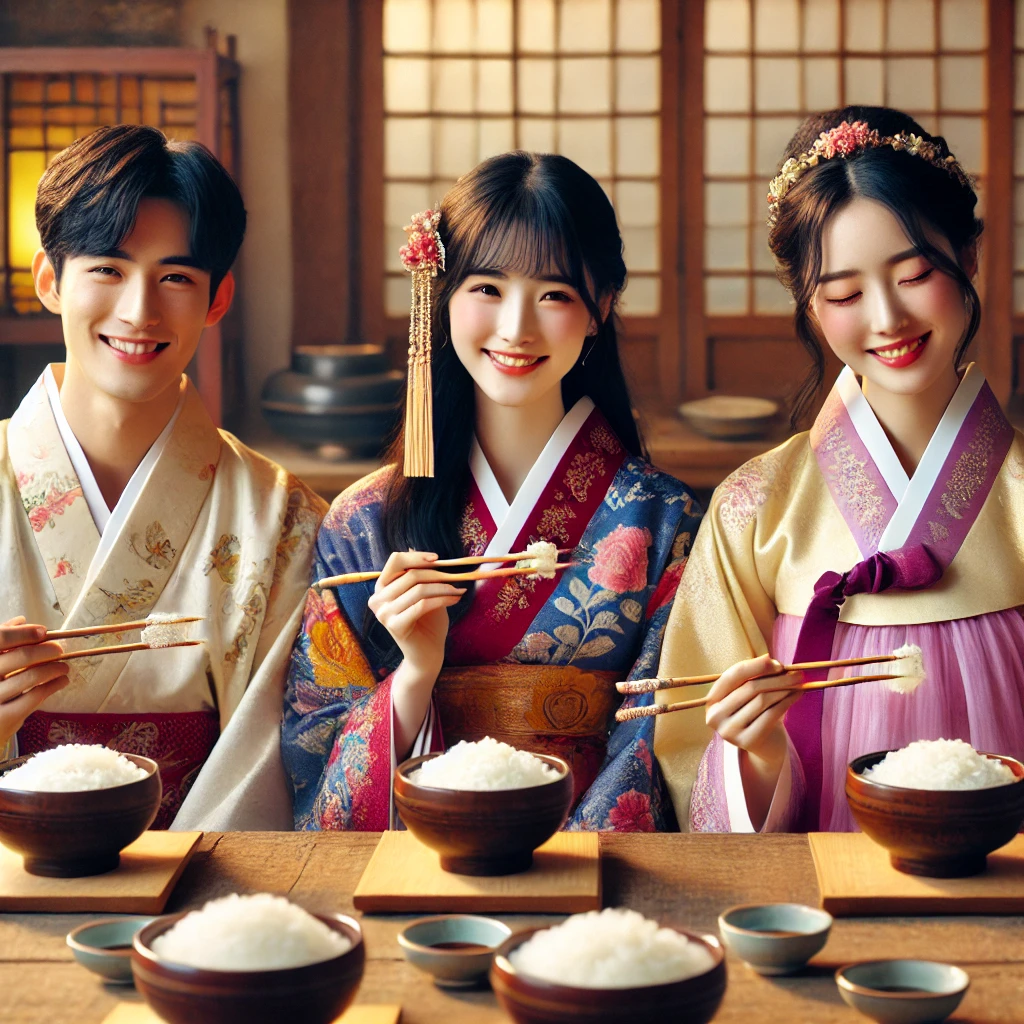
In English, “rice” is just… rice.
But in many Asian cultures? It’s an entire universe of meaning—woven into the language, culture, and even the way people show love and care.
Let’s explore how rice isn’t just food—it’s language, identity, community, and history, all in one grain.
1. Chinese: 米 (mǐ) & 饭 (fàn)
In Mandarin Chinese, there’s a clear distinction between raw and cooked rice—and that difference carries cultural depth.
- 米 (mǐ) = raw, uncooked rice
- 饭 (fàn) = cooked rice, or broadly, a meal
So when someone says:
你吃饭了吗?(nǐ chī fàn le ma?)
“Did you eat rice?”
They’re not just asking if you had lunch. It’s a traditional greeting rooted in a time when food scarcity was real. It's another way of asking, “Are you okay? Have you taken care of yourself today?”
Even modern slang uses “rice”:
- 饭圈 (fàn quān) = fan circles, fandoms (literally, “rice circles”)
→ Yes, rice = fans now!
Rice in Chinese isn’t just food—it’s love, care, and even pop culture.
2. Japanese: 米 (kome) & ご飯 (gohan)
In Japanese, rice is so essential that it’s built into every mealtime expression.
- 米 (kome) = raw rice
- ご飯 (gohan) = cooked rice and meal
Examples:
- 朝ごはん (asagohan) = breakfast
- 昼ごはん (hirugohan) = lunch
- 晩ごはん (bangohan) = dinner
If you ask:
もう晩ごはん食べた?(Mou bangohan tabeta?)
“Have you eaten dinner?”
You're using “rice” to mean the entire evening meal.
In Japanese, rice is not a side dish. It’s the dish.
3. Korean: 밥 (bap)
In Korean, 밥 (bap) also means both cooked rice and a meal.
- 밥 먹었어요? (Bap meogeosseoyo?)
“Did you eat?”
This simple question is a deeply cultural way of expressing concern, love, and care. You’ll hear it from parents, friends, and even strangers.
Rice = nourishment. Rice = connection.
To “eat rice” is to be okay. And to ask if someone ate is to say, “I care about your well-being.”
Why This Matters
In many Western contexts, food is something you “have.” You “have breakfast.” You “grab lunch.” It’s transactional.
But in many Asian cultures:
- Food is survival
- Food is family
- Food is culture
- And rice? It’s everything
It becomes the very structure of language—used to talk about meals, express love, and bind communities together.
So next time someone asks:
你吃饭了吗?(nǐ chī fàn le ma?)
“Did you eat rice?”
Know that it’s more than small talk.
It’s a tradition of care, thousands of years old.
It’s love in the form of language.
It’s culture in a bowl.
Final Thought
In the West, rice is just a grain.
In Asia, rice is a verb, a greeting, a hug.
Language reflects culture—and sometimes, a bowl of rice speaks louder than words.
#LanguageLovers #AsianCulture #RiceIsLife #WordsWithMeaning #Chinese #Japanese #Korean #CulturalLinguistics